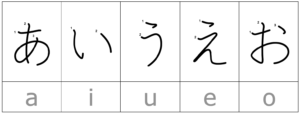
These 5 characters are the vowels of Japanese. While English (depending on where you are from) can have anywhere from 24 to 27 different vowel sounds, GOOD NEWS: Japanese only has these 5!
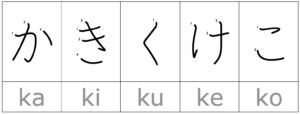
This is why our hiragana characters in this group (and beyond) need either two or three English letters. This group is simply made up of the 5 vowel sounds added to the consonant “k” sound.
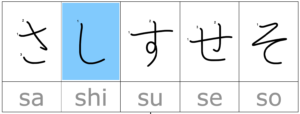
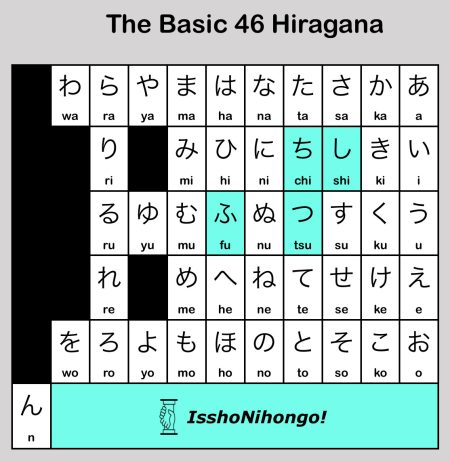
According to the pattern so far, you would think that the し character would be pronounced “si”, as in the Spanish word for “yes”. In actuality, it’s pronounced “shi” as in the English word “she”. This is something to take a mental note of.
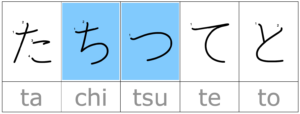
Unfortunately, the character つ doesn’t have any equivalent sound in English. Instead of sounding like the Spanish word for you (tu), the closest we can get is trying to make the “t” sound while saying the name “Sue”! This character took me a bit of practice to master.
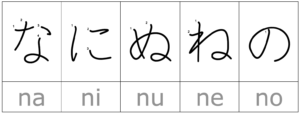
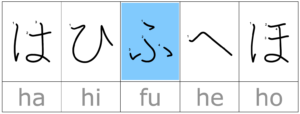
The H sound group has one irregular character. You might be tempted to think that ふ is pronounced as “hu”. If you look at the English representation, you might think that it’s pronounced as the first part of the word “fool”. In actuality it is pronounced somewhere in between! Just like つ, this character took me some time to get right.
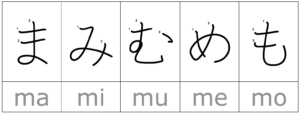
This group is just the 5 vowel sounds added to the consonant “m” sound, so the pronunciations are pretty straightforward.
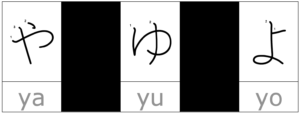
Also, these 3 characters are very important for making another set of sounds in Japanese. More on that here.
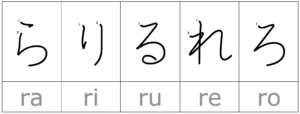
As you may or may not know, Japanese people have a very hard time pronouncing and differentiating between the English “r” and “l” sound. The reason is that they don’t have those sounds in Japanese. Unfortunately that also means that these 5 characters are not easy for native English speakers to pronounce. Each character’s pronunciation is actually somewhere between an “r” and an “l” sound. These characters took me the longest time to master (especially in long words!)
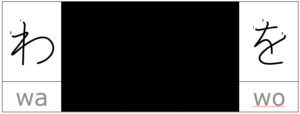

The last basic character is ん. This is actually the only character that can be represented by a single consonant. It is mostly easy to tell when you are hearing this character, but there are times when its pronunciation changes. More on that later.
Typing
The great thing is that now you’re ready to type in Japanese!
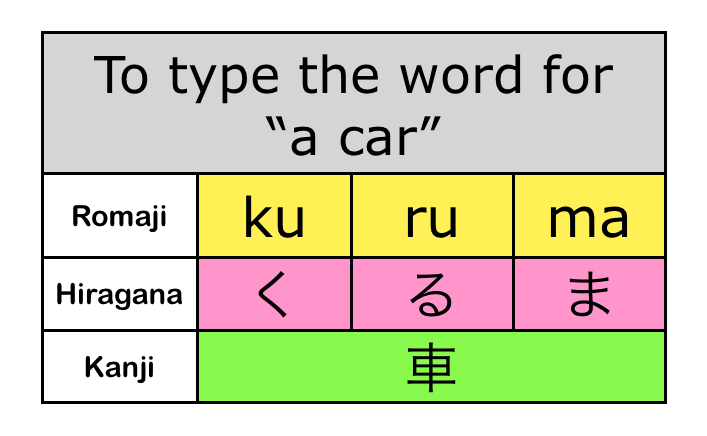
Here’s how it works. When you type the correct combination of Romaji, your keyboard will automatically convert the characters to Hiragana. If you type the correct combination of Hiragana characters, it will automatically change to Kanji. Now you can play around and practice typing Hiragana!