The あ Vowel Sound Group
Take a look at the following 15 characters:
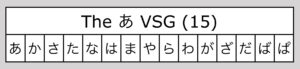
You’ll notice that all these characters end in the same vowel sound. I’m going to call these characters “the あ V.S.G.” where VSG stands for vowel sound group.
Some of these characters will be important when we talk about negation in verbs. They will also be important when we talk about receptive and causative sentences.
The い VSG
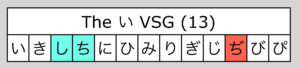
The next VSG will be very important when we talk about our last set of 36 sounds. They will also be important when using the polite version of verbs and when you talk about actions that you want to do.
Keep in mind that ぢ is rarely used in modern Japanese words.
The う VSG
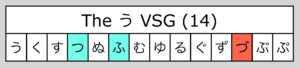
9 of the sounds in this group will be very important when we talk about Japanese verbs.
Just like ぢ、づ is hardly ever used in modern Japanese words.
The え VSG
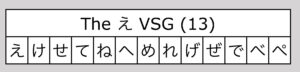
This group of sounds will be important when we talk about how you say that you are able to do things, and also when you want to say “If I do X, then Y”.
The お VSG
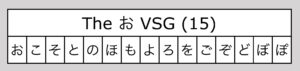
This final group is used when you want to say that”let’s do 〜”, and also when you talk to yourself about doing actions.

