Long Vowel Sounds
Table of Contents
Chō-on is the extending of Japanese vowel sounds. This may not seem like a big difference when it comes to English but it is huge in Japanese. Even in English, think of the reaction to saying “I went to.” vs “I went too.” In Japanese the difference is even bigger!
Since there are only 5 vowel sounds in Japanese, there can only be 5 long vowel sounds. Let’s get into it!
Syllables vs. Morae
When it comes to English words, there are several ways in which we can break them down. You can talk about how many letters a word has. In terms of sounds, you can talk about syllables and you can talk about how many sounds a word is made up of.
Take the word “teacher” for example:
letters ➡️ t-e-a-c-h-e-r (7)
sounds ➡️ t-ea-ch-er (4)
syllables ➡️ teach-er (2)
Japanese is very different. It doesn’t actually make sense to talk about syllables because there are words that are one syllable length but that have different speech times. A mora solves this problem. 1 mora represents one unit of sound length. A Japanese word can be 1 syllable but 2 or 3 morae long.
Tokyo written in English vs written in Hiragana is a good example:
letters ➡️ T-o-k-y-o (5)
syllables ➡️ To-kyo (2)
Hiragana characters ➡️ と-う-き-ょ-う (5)
morae ➡️ と-う-きょ-う (4)
You can see that each syllable of Tokyo is actually made up of 2 morae each. To better represent this, it would be better to write it using macrons. Check out how JR East (the main train company in the area) writes it on the station sign.
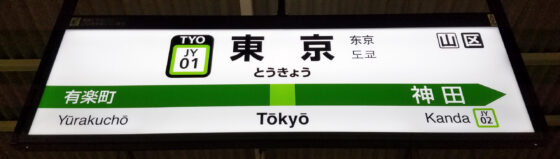
Do you see the 4 examples of long vowel sounds on this sign?
1) Extended あ Sound
The first sound is an extended あ sound, similar to “aah” in English. There are 2 different ways that you will see this sound written:
① 【あ VSG character + あ】
for example おかあさん = mother
② 【ゃ Sound Group character + あ】
for example じゃあ = alright, well…, so then…
Pronouncing あ should take half as long as pronouncing かあ. Therefore あ is considered 1 mora long while かあ is considered as 2.
The first spelling of this sound is fairly rare, while the second spelling is usually used in words that express sounds and feelings at the end or beginning of sentences.
2) Extended い Sound
The next sound is the extended い sound. It’s the same as when you draw out the “ee” sound in “see”. There is only 1 way you will see this written:
① 【い VSG character + い】
for example やさしい = simple, easy, kind
There are lots and lots of adjectives that end with しい. A large majority of them express feelings.
3) Extended う Sound
The next long vowel sound is the extended う sound. This sounds like the end part of the sound cows make – mooo! There are two ways this sound can be written:
① 【う VSG character + う】
for example くうき = air
② 【ゅ Sound Group character + う】
for example しゅうでん = the last train (of the night)
4) Extended え Sound
This sound is similar to how we pronounce the letter “A” in English. It has two spellings:
① 【え VSG character + え】
for example おねえさん = older sister
② 【え VSG character + い】
for example せんせい = teacher, master
Of the two, you will hardly ever see the first spelling. The second one is much more common.
5) Extended お Sound
The last vowel sound is a drawn-out way of pronouncing the English letter “O”. This sound has 3 ways it can be written:
① 【お VSG character + お】
for example とおい = far
② 【お VSG character + う】
for example ほんとう = real
③ 【ょ Sound Group character + う】
for example きょう = today
The first spelling of this sound is used the least often. You will see the last two spellings much more often.
The Importance of ちょうおん
Distinguishing between long vowel sounds and regular vowel sounds is SUPER important in Japanese. Beginners of Japanese might see “Tokyo” written in English and think that it’s written as ときょ in Hiragana. That is completely incorrect.
Another example is しょこく as compared to しょうこく. Said with a short vowel sound (しょ) it means “various countries”. However, if you use a long vowel sound (しょう) the meaning changes to “small countries”. Luckily this is not such a huge mistake, but sometimes you might be saying something completely different than what you think you’re saying!
5 More ようおん and ちょうおんぷ
We’ve already talked about ょ、ゅ and ょ. It turns out that there are also small versions of あ、い、う、え、and お. These are sometimes used in place of the conventional way of spelling the long vowel sounds.
なあ can also be written as なぁ.
There is just one wrinkle. While な is 1 mora (1 unit of sound length) and なあ is 2 morae, なぁ is ambiguous. In some cases it may be 2 morae but in other cases it could be 1.5 morae. Unfortunately it’s going to depend on the context and the speaker. For comparison, here are all the ようおん and their regular counterparts:
あいうえおやゆよ and ぁぃぅぇぉぅゃゅょ
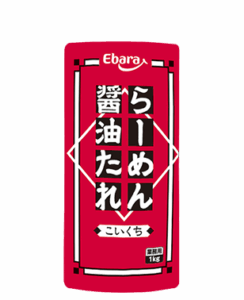
Yet another way that you can write long vowel sounds is with a chō-onpu. This means “ちょうおん mark / sign” and is a long dash that is mostly used to show long vowel sounds in Katakana words. In rare situations though, it is used with Hiragana, as in the word らーめん.
This means that for the long vowel sound in ramen, you technically have three ways that it could be written!
らあめん
らぁめん
らーめん
Of those three, the last one is used the most often. Also be aware that when Japanese is written vertically, the ちょうおんぷ will also appear vertically.
NOT Chō-on
Finally, I think it’s important to talk about what are not long vowel sounds. The word おかあさん has that long vowel sound in the middle but take a look at this next word:
あかあか
This word does not have a long vowel sound in the middle! Why??
For the answer, we need to see these words written in Kanji!
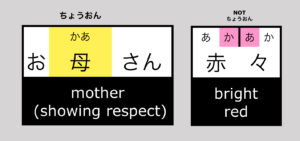
A long vowel sound won’t fall in the middle of two Kanji characters. It is possible though, that two Kanji characters can make a long vowel sound together, as shown below:
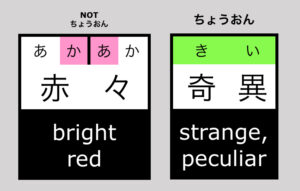
This is just one of many reasons that studying Kanji becomes more and more important as you learn more Japanese. There are times when seeing Hiragana alone might lead you down the wrong pronunciation path!
Conclusion
And there you have it – a deep dive into long vowels of Japanese! It definitely takes training for your ears to hear the subtle difference between short and long vowel sounds. I get tripped up sometimes even now 10 years later. All you can really do is laugh it off and make a mental note to look into it later. This is the journey of a Japanese learner!